Phone:+8613832323151
Fax:0311-66516568
Email:hsdsjz@126.com
Address: North of Xucun Village, Qiutou Town, Circular Chemical Industry Park, Shijiazhuang City, Hebei Province
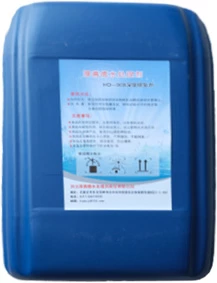
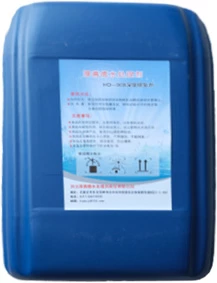
During the continuous operation of industrial circulating cooling water systems, water continuously evaporates, and calcium and magnesium ions, suspended solids, and microorganisms in the water gradually accumulate, which can easily lead to scaling, corrosion, and bacterial and algal growth, affecting the efficiency of heat exchange equipment and increasing the risk of pipeline blockage and equipment damage. Reasonably adding water treatment agents is a common means to maintain the stable operation of the circulating water system. This article introduces the commonly used industrial circulating cooling water systemsWater Treatment ChemicalsTypes, functions, and applicable scenarios.
1、 Scale inhibitor
Scale inhibitor is a commonly used chemical in circulating water systems. After increasing the concentration factor of circulating water, the concentration of calcium, magnesium, carbonate, and sulfate ions increases, which can easily precipitate hard scale on the inner walls of heat exchangers and pipelines, reducing heat transfer efficiency.
Scale inhibitors can inhibit the aggregation and growth of salt crystals and reduce the adhesion of scale to metal heat exchange surfaces through dispersion, chelation, lattice distortion, and other effects. Common categories include organophosphates, polycarboxylates, and polymer scale inhibitors, which can be adapted to different water hardness and alkalinity conditions, delaying the formation of scales such as calcium carbonate, calcium sulfate, and magnesium silicate.
2、 Corrosion inhibitor
Circulating cooling water will continue to come into contact with metal materials such as carbon steel, stainless steel, copper alloys, and equipment and pipelines. Dissolved oxygen, chloride ions, and pH fluctuations in the water can all pose a risk of metal corrosion. The function of corrosion inhibitors is to form a protective film on the metal surface, isolate the corrosive medium in the water, reduce the electrochemical corrosion rate, and protect metal components such as heat exchangers, pipelines, and pump bodies.
According to the type of film formation, corrosion inhibitors can be divided into oxide film type, precipitation film type, and adsorption film type. In practical projects, it is often used in combination with scale inhibitors to form an integrated formula for scale and corrosion inhibition, taking into account both scale and corrosion prevention requirements.
3、 Fungicide and algaecide
The temperature and water environment of the circulating cooling water system are suitable for the reproduction of algae and bacteria. The proliferation of microorganisms can lead to the formation of sticky mud adhering to the pipe wall, reducing heat transfer efficiency and causing pipeline blockage; On the other hand, microbial metabolites can accelerate metal corrosion and form microbial corrosion.
Fungicides and algaecides are divided into two categories: oxidizing and non oxidizing. Oxidative agents commonly include hypochlorite, chlorine dioxide, etc., which have a fast sterilization rate; Non oxidizing agents are often used as auxiliary treatments for stubborn microorganisms that cannot be controlled by oxidizing agents. Alternating the two types of agents can reduce the probability of microbial resistance.
4、 Mud stripping agent
After long-term operation of the system, the biofouling formed by microorganisms will tightly adhere to the inner walls of pipelines and heat exchangers, making it difficult for conventional fungicides to penetrate. Mud stripping agent can destroy the structure of biofilm, strip off the mud attached to the surface of the equipment, and discharge it out of the system with the water flow.
It is generally used during system maintenance and when there is a lot of mud accumulation. It is used in conjunction with sewage operations to clean up the biological sediment accumulated inside the pipeline and improve the effectiveness of subsequent chemicals.
5、 Cleaning agent
Cleaning agents are mostly used before the system is put into operation or during maintenance, and are divided into categories such as acid cleaning, alkali cleaning, neutral cleaning, etc. Before the new system is put into operation, there will be rolling scale, oil stains, and sediment inside the pipelines and heat exchangers; The old system will accumulate old scale, rust products, and mud.
By circulating cleaning agents, pollutants on the inner walls of the equipment are removed, creating a clean metal surface for the subsequent normal addition of scale and corrosion inhibitors, ensuring the smooth formation of the protective film. After cleaning, it is generally necessary to cooperate with the pre film process.
6、 Pre film agent
Pre film agents are mainly used after cleaning and before the system is officially put into operation. The cleaned metal surface has high activity and is prone to rapid corrosion. Pre coating agents can quickly form a complete and dense protective film on clean metal surfaces, reducing the initial corrosion rate and minimizing equipment corrosion losses during startup. After the pre coating is completed, proceed to normal corrosion inhibition maintenance.
7、 PH regulator
The acidity and alkalinity of circulating water directly affect the scaling trend, corrosion rate, and the effectiveness of various chemicals. PH regulators are used to adjust the acidity and alkalinity of circulating water, commonly including acid and alkali based agents. By adjusting the pH value, the water is stabilized within an appropriate range, reducing metal corrosion while ensuring the stable efficacy of scale and corrosion inhibitors.
Summary
Commonly used in industrial circulating cooling water systemsWater Treatment ChemicalsIt mainly includes scale inhibitors, corrosion inhibitors, bactericidal and algicidal agents, mud stripping agents, cleaning agents, pre film agents, and pH regulators. Different agents have their own responsibilities, solving problems such as scaling, metal corrosion, bacterial and algal sludge, and water quality pH imbalance. In actual selection, it is necessary to combine the conditions of water source quality, system material, operating temperature, concentration ratio, etc., and match the corresponding chemical scheme. At the same time, regular water quality testing and sewage management should be carried out to ensure the smooth operation of the circulating cooling water system.
Company phone:+8613832323151
Company Email: hsdsjz@126.com
Company address: North of Xucun Vilage,Qiutou Town,Shijiahzuang Circular Chemical Park,Hebei Province